Commission-free offer

Flexible Logistik und Lager ab 1.000 m² - Mit Anschluss an A93 und weiteren Autobahnen
Object no.: 10180
Logistics real estate
Rental
Germany
95145 Oberkotzau
13.400 m²
Price on request

Here you get an overview of suitable Distribution Warehouses in different cities and regions.
At LAGERflaeche.de you can use the map search or search mask to look for suitable offers. Find selected Distribution Warehouses and rent/buy at LAGERflaeche.de!
Object no.: 10180
Rental
Germany
95145 Oberkotzau
Price on request
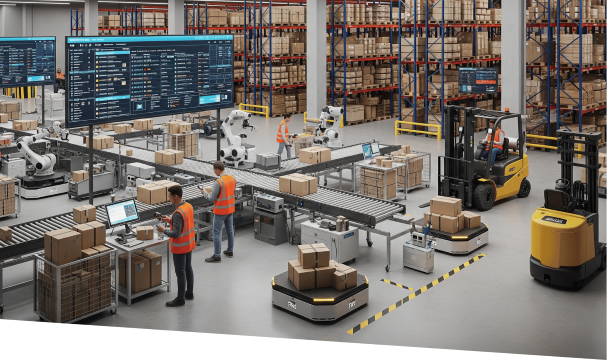
A distribution warehouse is a central element in logistics that stores and distributes goods efficiently. It acts as an intermediate stop in the supply chain, where companies receive and store products in large quantities and deliver them as required. The main functions include goods receipt, storage, picking, packing, goods issue and inventory management. Distribution warehouses vary from automated to manually operated facilities and are critical to supply chain efficiency and customer satisfaction. Modern technologies such as automated systems and warehouse management systems increase efficiency and reduce costs. A well-thought-out organization not only promotes responsiveness to market changes, but also gives companies a competitive advantage in the dynamic logistics environment.
Distribution warehouses increase the efficiency of the supply chain and improve customer satisfaction. Through strategic positioning and modern technologies such as warehouse management systems, companies optimize their warehouse processes, reduce costs and improve inventory control. Central, regional and cross-docking warehouses offer specific advantages: Central warehouses reduce costs through consolidation, regional warehouses enable faster delivery times, while cross-docking centers optimize the flow of goods. This flexibility is crucial for adapting to market changes. Distribution warehouses promote efficient warehousing, shorten delivery times and enable a rapid response to fluctuations in demand. They are scalable, improve the order picking process and centralize logistics processes, thereby minimizing risks. Overall, distribution warehouses strengthen a company's competitiveness and efficiency in the long term.
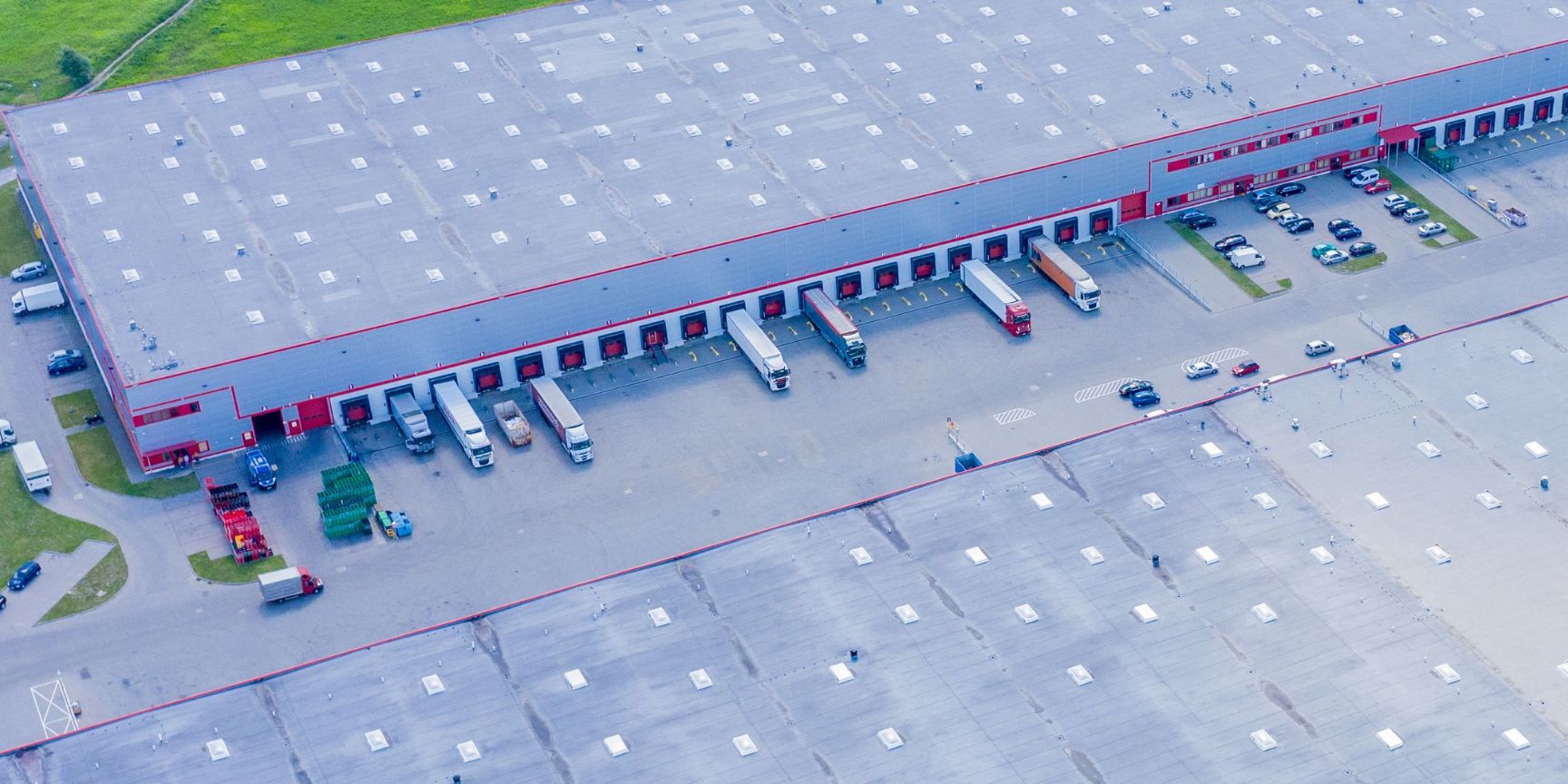
Distribution warehouses play a crucial role in the efficiency of the supply chain. There are different types, including central warehouses, regional warehouses and cross-docking centers, each offering specific benefits. Central warehouses consolidate stock in one location, which reduces costs and simplifies logistics. Regional warehouses, on the other hand, are located closer to the customer and enable faster delivery times and greater flexibility during peak demand. Cross-docking centers optimize the flow of goods by routing products directly from inbound to outbound, minimizing storage costs and speeding up processes. Each warehouse model requires careful planning and coordination to ensure a smooth supply chain.
Challenges include lack of space, high operating costs, seasonal fluctuations and security requirements. The lack of space requires flexible storage solutions and optimized layout planning to use the space efficiently. High operating costs can be reduced through energy-efficient technologies and employee training programs. Seasonal fluctuations in demand can be better managed through forward planning and forecasting tools. Security aspects should be taken seriously; clear guidelines and modern technologies increase protection in the warehouse.
The integration of data analysis and artificial intelligence (AI) is revolutionizing warehouse management. By evaluating large amounts of data, companies can create precise demand forecasts, which enables optimized inventory management. AI systems also improve internal processes by calculating efficient picking routes and automatically optimizing the arrangement of products. Best practices such as well-designed warehouse layouts and modern warehouse management systems (WMS) significantly increase efficiency, while technologies such as RFID improve the flow of goods. Regular sales data analysis promotes forward planning and timely reordering. Well-trained employees and incentive systems increase both efficiency and customer satisfaction. Technological innovations, despite initial investments, quickly lead to cost reductions and improved competitiveness. Sustainability is also becoming increasingly important, as energy-efficient systems and sustainable packaging reduce operating costs and minimize the ecological footprint. Overall, these developments offer extensive opportunities for optimizing warehouse management. We at LAGERflaeche.de will be happy to advise you on how you too can use distribution warehouses to your advantage!
West
Rent a production hall in Frankfurt
Warehouse in Cologne
Industrial warehouse in Saarbrücken
South
Find Logistics Space in Munich
Storage Space in Nuremberg
Logistics Hall in Stuttgart
Rent Warehouse in Freiburg
Rent Warehouse Space in Italy
Logistics Hall in Austria
Storage Space in the Netherlands
Warehouses in France
Search Storage Space in Poland
Renting halls in Switzerland
Find logistics premises in Belgium
Storage in Bulgaria
Renting warehouses in the UK
Search for warehouse properties in Croatia
Logistics warehouses in Romania
Logistics centres in Russia
Search for warehouse locations in Slovenia
Rent warehouse space in Slovakia
Logistics property in Spain
Find storage space in Hungary
Rent a warehouse in the Czech Republic
Storage facility in Denmark